Quick answer: Postpartum pelvic floor physiotherapy helps with bladder leakage, pelvic pain or heaviness, pain during intimacy, diastasis recti (core separation), and C-section scar recovery. It’s helpful after vaginal or C-section births, no referral is typically needed, and most Extended Health Care (EHC) plans cover it. OHIP does not. Ontario Rehab Centre offers direct billing.
Childbirth, whether vaginal or by C-section, asks a lot of your body. The visible healing is only part of it. Your core, pelvic floor, and posture all change during pregnancy and delivery, and many new mothers are told to simply “give it time” without much guidance on what recovery should actually look like. Postpartum pelvic floor physiotherapy offers a more structured, active path back to feeling like yourself.
Key Takeaways
- Pelvic floor physiotherapy supports recovery after both vaginal and C-section births
- Common concerns include bladder leakage, pelvic heaviness, pain with intimacy, diastasis recti, scar tissue tightness, and back or hip pain
- These symptoms are common after birth, but common doesn’t mean you have to live with them
- Pelvic floor muscle training is widely recommended as a first-line approach for many of these concerns
- No doctor’s referral is typically required to begin
- OHIP does not cover postpartum physiotherapy, but most EHC plans do
What Is Postpartum Pelvic Floor Physiotherapy?
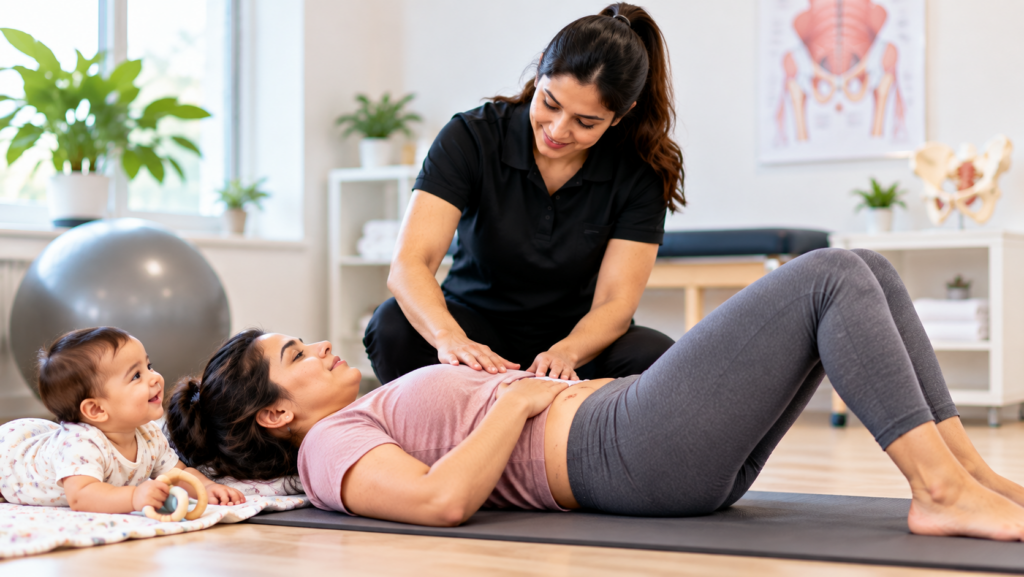
Your pelvic floor is a group of muscles that supports your bladder, bowel, and uterus, and works closely with your deep core muscles. Pregnancy and delivery can weaken, overstretch, or tighten these muscles. Postpartum pelvic floor physiotherapy assesses how this whole system is working and builds a treatment plan around what you actually need. That may include targeted exercises, hands-on techniques, movement and posture guidance, and a safe return-to-activity plan.
What Does Postpartum Physiotherapy Treat?
- Bladder leakage when coughing, sneezing, laughing, or exercising
- Pelvic heaviness or pressure, sometimes described as a dragging sensation
- Pain during intimacy, which is common and often treatable
- Diastasis recti, the separation of the abdominal muscles that is common after pregnancy
- C-section scar tissue, including tightness or restricted mobility around the incision
- Back, hip, and pelvic pain from pregnancy changes and the demands of feeding and carrying a newborn
- Core strength and stability, rebuilding safely before returning to exercise
Is Leaking or Pelvic Pain After Birth “Normal”?
This is one of the most common beliefs we hear, so it’s worth being direct. These symptoms are very common after childbirth, which is why many people assume nothing can be done. But common is not the same as untreatable. Pelvic floor muscle training is widely recommended as a first-line approach for many of these concerns, and pelvic floor physiotherapy is built to address exactly this.
If something feels off, you don’t have to wait until it becomes a bigger problem, and you don’t have to be embarrassed to ask about it.
Do I Still Need Pelvic Floor Physiotherapy If I Had a C-Section?
Yes. A C-section doesn’t skip the effects of pregnancy. Carrying a baby for nine months still affects your pelvic floor and core, regardless of how you deliver. A C-section is also major abdominal surgery, and the incision can create scar tissue tightness that affects mobility and comfort. Physiotherapy can address both the pregnancy-related changes and the surgical recovery.
What Happens at a First Appointment?
Your first visit starts with a conversation, not a procedure:
- A review of your birth experience, symptoms, medical history, and goals
- An assessment of your posture, core, and movement
- A pelvic floor assessment, only with your informed consent, and explained to you before anything is done
- A personalized plan, including home exercises you can build into daily life
You’re always in control of what happens during an appointment, and you can ask questions or pause at any point.
What About Diastasis Recti?
Diastasis recti is extremely common after pregnancy and is a normal part of how the body makes room for a growing baby. It’s not a sign that something went wrong. Rather than focusing only on “closing the gap,” the more useful goal is usually rebuilding core strength, coordination, and confidence with movement. Popular products like belly binding are often marketed as a fix, but current research doesn’t support them as an effective treatment on their own.
Does Insurance Cover Postpartum Pelvic Floor Physiotherapy?
OHIP does not cover postpartum physiotherapy. Most Extended Health Care (EHC) plans do cover physiotherapy, and postpartum care typically falls under that same benefit. Coverage limits vary by plan, so it’s worth checking your policy details, or our team can help confirm before you book..
Frequently Asked Questions
How soon after giving birth can I start physiotherapy? This varies by individual recovery and delivery type. Your doctor or midwife’s guidance should come first, especially after a C-section, and many people begin once they’ve had clearance at their postpartum check.
Do I need a referral to see a physiotherapist postpartum? No referral is typically required, though some insurance plans may ask for documentation for a claim.
Is it too late if my baby is already a year old, or older? Not at all. Many people seek treatment months or even years after giving birth, once symptoms become noticeable or bothersome.
Will pelvic floor physiotherapy always involve an internal exam? No. Treatment is based on your symptoms and comfort level, and any internal assessment is only done with your informed consent after it has been explained to you.
Is diastasis recti something I have to live with permanently? Not necessarily. Many people see meaningful improvement in strength and function with targeted rehabilitation, even if some separation remains.
Will physiotherapy help if my C-section scar still feels tight or sensitive? Yes. Scar tissue mobility work is a common part of postpartum physiotherapy and can improve comfort and movement over time.
Ready to Get Started?
Recovery after childbirth deserves more than “wait and see.” Our team at Ontario Rehab Centre is here to help you rebuild strength, address symptoms, and move through recovery with a clear plan, whether your delivery was vaginal or by C-section.
📞 Call us at 905-495-3545 or book an assessment online to get started.
Related: Physiotherapy Services | Outpatient Neurological Physical Therapy in Brampton
Source: General postpartum recovery guidance from the Society of Obstetricians and Gynaecologists of Canada.
This article is for general informational purposes and does not constitute medical advice. Always get clearance from your doctor or midwife before beginning postpartum exercise or physiotherapy, especially after a C-section.
Ontario Rehab Centre 20 Regan Rd Unit 1, Brampton, ON L7A 1C3, Canada