Quick answer: Post-surgery rehabilitation typically begins 1–2 weeks after your procedure (sooner for some surgeries, later for others depending on your surgeon’s clearance), and involves a structured physiotherapy plan to restore strength, mobility, and function safely. Recovery timelines range from 4–6 weeks for minor procedures to 4–6 months for major joint replacements. Ontario Rehab Centre works directly with your surgeon’s post-op protocol and offers direct billing where coverage applies.
Surgery fixes the structural problem — but it’s the rehabilitation afterward that determines how well you actually recover. Scar tissue, muscle weakness from inactivity, and stiffness are normal after any procedure, and without guided rehab, they can turn into long-term limitations. Here’s what the process typically looks like.
Key Takeaways
- Most patients start physiotherapy 1–2 weeks post-surgery, based on surgeon clearance
- Recovery timelines vary significantly by procedure — from a few weeks to several months
- Ontario Rehab Centre coordinates directly with your surgeon’s rehabilitation protocol
- No physiotherapy referral delay is needed if your surgeon has already provided post-op instructions
- Skipping structured rehab increases the risk of stiffness, weakness, and reinjury
- Direct billing is available for EHC plans and WSIB-related surgical claims
Why Rehabilitation Is Essential After Surgery
Surgery addresses the underlying structural issue — a torn ligament, a damaged joint, a herniated disc — but the body still needs to relearn how to move properly afterward. Weeks of reduced activity before and after surgery lead to muscle atrophy, and the healing tissue itself needs to be guided through a specific loading progression to heal correctly.
Without structured rehabilitation, patients commonly experience:
- Persistent stiffness or reduced range of motion
- Muscle weakness around the surgical site
- Compensatory movement patterns that create new pain elsewhere
- Slower return to work, sport, or daily activities
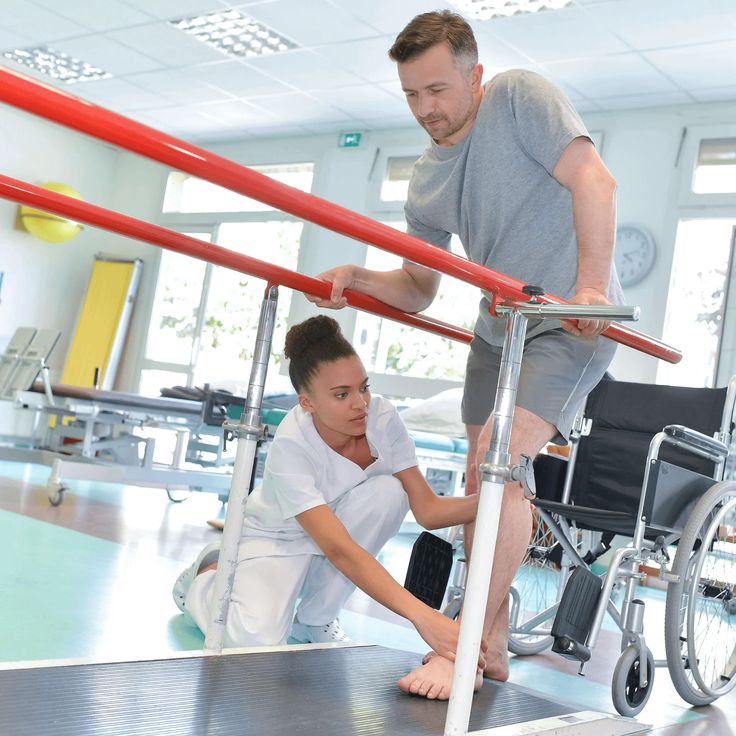
Recovery Timelines by Common Procedure
Every patient heals differently, but here are general timelines we typically see:
- Knee arthroscopy — physiotherapy starts within days; full recovery 6–12 weeks
- ACL reconstruction — rehab starts within 1–2 weeks; full return to sport 6–9 months
- Total knee or hip replacement — rehab starts within days in-hospital, continues 3–6 months
- Rotator cuff repair — gentle motion begins early; full strength recovery 4–6 months
- Spinal surgery (discectomy/fusion) — timeline varies widely; typically 6 weeks to 6 months depending on the procedure
- Carpal tunnel release — light rehab within 1–2 weeks; full recovery 6–8 weeks
These are general ranges — your surgeon’s specific protocol always takes priority over generic timelines.
What a Post-Surgical Treatment Plan Looks Like
- Initial assessment — review of surgical notes, current range of motion, pain levels, and surgeon’s precautions
- Early-phase rehab — gentle range-of-motion work, swelling management, and scar tissue mobilization
- Progressive strengthening — introduced once tissue healing allows, following your surgeon’s timeline
- Functional retraining — rebuilding the specific movements needed for work, sport, or daily life
- Discharge planning — a home exercise program to maintain progress independently
Session frequency is usually higher in the early weeks (2–3x/week) and tapers as strength and confidence return.
Working With Your Surgeon’s Protocol
Every surgeon has a specific post-operative protocol — precautions, timelines for weight-bearing, and restrictions on certain movements. We request and follow these protocols directly so your rehab plan stays aligned with your surgeon’s expectations, rather than working off generic guidelines.
Frequently Asked Questions
How soon after surgery should I start physiotherapy? It depends on the procedure, but most patients begin within 1–2 weeks, once cleared by their surgeon. Some procedures, like joint replacements, start rehab within days.
Do I need a referral from my surgeon to start rehab? Typically your surgeon provides a post-op protocol or referral, but you don’t need to wait for a formal referral to book an initial assessment — we can start planning your care right away.
Will physiotherapy hurt after surgery? Some discomfort during early mobility work is normal, but your program is built around your healing timeline and pain tolerance — it should never involve pushing through significant pain.
What if I had surgery months ago and never did rehab? It’s not too late. While earlier rehab tends to produce better outcomes, we regularly help patients regain strength and mobility even well after their original recovery window.
Is post-surgical physiotherapy covered by insurance? It depends on the cause of your surgery. WSIB, auto insurance, and Extended Health Care plans can all apply — see our guide on insurance coverage for physiotherapy for details.
Ready to Get Started?
Whether you’re a few days out from surgery or a few months in and still not feeling like yourself, a structured rehab plan makes a real difference in how well and how fully you recover. Our team at Ontario Rehab Centre works directly with your surgeon’s protocol to build a plan that fits your timeline.
📞 Call us at 905-495-3545 or book an assessment online to get started.
Ontario Rehab Centre 20 Regan Rd Unit 1, Brampton, ON L7A 1C3, Canada Phone: 905-495-3545
Related: Physiotherapy Services (service) | Does Insurance Cover Physiotherapy in Brampton? (blog) | OrthoInfo: Recovering from Surgery (source)
This article is for general informational purposes and does not constitute medical advice. Always follow your surgeon’s specific post-operative instructions — recovery timelines and precautions vary by individual and procedure.